Organising a successful event involves much more than bringing people together. From venue selection and stage design to lighting, sound, décor, logistics, and guest coordination, every element needs to work together seamlessly.
Managing multiple event elements can be challenging, particularly when working with tight deadlines, different vendors, and changing requirements. Without proper coordination, even small oversights can affect the overall event experience.
This is where professional event management and planning make a difference. With a clear strategy, effective communication, and attention to detail, event organisers can manage complex requirements while maintaining high standards throughout the process.
1. Start with a Clear Event Plan
Every successful event begins with a well-defined plan. Before coordinating individual elements, it is important to understand the event’s objectives, audience, budget, timeline, and expected outcomes.
A comprehensive event planning strategy helps identify the resources required and establishes clear priorities for each stage of execution.
Whether it is a corporate conference, product launch, exhibition, or gala dinner, having a structured plan ensures that every activity contributes to the overall event vision.
Breaking the event into manageable tasks also makes it easier to monitor progress and avoid last-minute complications.
2. Coordinate Every Event Element Carefully
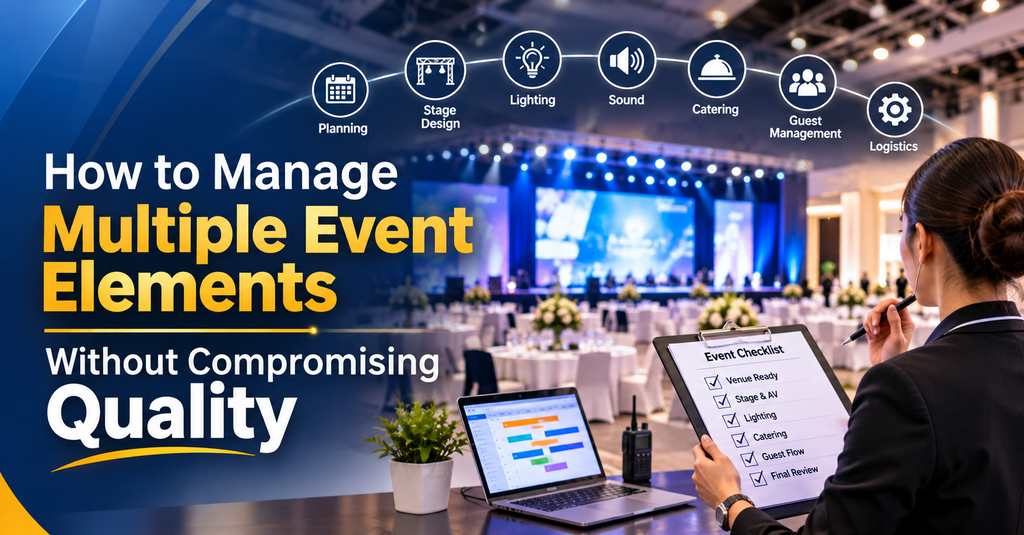
An event consists of several interconnected elements, and each requires proper attention. Stage production, audio visual systems, lighting, décor, catering, registration, and guest management must be coordinated to create a consistent experience.
For example, stage design should complement the event’s theme, while lighting and sound arrangements should support presentations and performances.
Professional event production and management involve ensuring that these elements work together rather than operating independently.
Creating a detailed event checklist and assigning responsibilities can help organisers maintain better control over the entire process.
3. Work with Reliable Event Vendors and Partners
Vendors play an important role in successful event execution. From production teams and decorators to catering providers and technical specialists, each partner contributes to the final experience.
Choosing reliable vendors with relevant experience helps reduce coordination challenges and maintain consistent quality.
Clear communication about timelines, deliverables, technical requirements, and expectations is essential. Regular updates and coordination meetings can also help identify potential issues before they affect the event.
For businesses planning corporate events or exhibitions in Qatar, working with an experienced event management company in Qatar can simplify vendor coordination and overall event execution.
4. Manage Time and Deadlines Effectively
Time management is one of the most important aspects of professional event planning. Multiple activities often need to happen simultaneously, making it essential to establish realistic schedules.
A detailed event timeline should cover:
- Venue preparation and setup.
- Stage construction and decoration.
- Lighting and audio visual installation.
- Equipment testing and technical rehearsals.
- Guest registration and coordination.
- Event execution and dismantling.
Allocating sufficient time for each activity helps avoid unnecessary delays. It is also important to maintain contingency time for unexpected changes.
Effective scheduling ensures that every team understands its responsibilities and that the event progresses according to plan.
5. Maintain Consistent Quality Across Every Detail
Maintaining quality requires more than focusing on the main stage or visual presentation. Every detail contributes to how guests perceive an event.
Venue arrangements, signage, seating, lighting, sound quality, décor, and guest services should all meet the expected standards.
A professional event quality management approach includes regular inspections, technical testing, and reviewing completed work against the original plan.
Before the event begins, conducting a final walkthrough can help identify overlooked details and ensure that all arrangements are ready.
Consistency across every element helps create a polished and professional event experience.
6. Prioritise Communication and Team Coordination
Successful event execution depends on effective teamwork. Different departments and vendors need to understand their responsibilities, deadlines, and coordination requirements.
Clear communication helps prevent misunderstandings and ensures that important updates reach the right people at the right time.
Assigning a dedicated point of contact for each major event component can make coordination more efficient.
During the event, a central coordination team can monitor activities, manage unexpected situations, and ensure that every department stays aligned with the event schedule.
This is particularly important for large-scale corporate events, conferences, and exhibitions where multiple teams operate simultaneously.
7. Prepare for Unexpected Challenges
Even the most carefully planned events can face unexpected situations. Technical issues, weather changes, vendor delays, or last-minute schedule adjustments can affect event execution.
Having a contingency plan helps organisers respond quickly without compromising the overall experience.
Some practical preparations include arranging backup audio visual equipment, confirming alternative suppliers, maintaining emergency contact lists, and preparing flexible event schedules.
Effective risk management is an essential part of professional event planning and coordination, allowing teams to handle challenges while keeping the event on track.
8. Focus on the Overall Guest Experience
While managing logistics and technical requirements is important, the ultimate goal of any event is to create a positive experience for its audience.
Guest registration, venue accessibility, seating arrangements, refreshments, signage, and interaction opportunities all influence how attendees experience an event.
A well-coordinated event should feel effortless to guests, even when extensive planning happens behind the scenes.
By considering the audience at every stage of the planning process, event organisers can ensure that operational efficiency translates into meaningful and memorable experiences.
Bringing Every Event Element Together with Magic B Events
Managing multiple event elements without compromising quality requires experience, organisation, and a clear understanding of how every detail contributes to the final outcome.
We believe successful events are built through thoughtful planning, creative execution, and seamless coordination. From event concepts and venue arrangements to production, design, and on-site management, every element deserves careful attention.
As an experienced event management company in Qatar, our approach focuses on bringing different event components together to create well-organised and engaging experiences.
Whether you are planning a corporate conference, exhibition, product launch, or special event, the right planning and coordination can make all the difference.